Tag Archives: federal hemp policy

Industrial Hemp Leaf Foods Are Now Legal In All 50 States — But The Same Law Also Tightens The Screw On THC-A

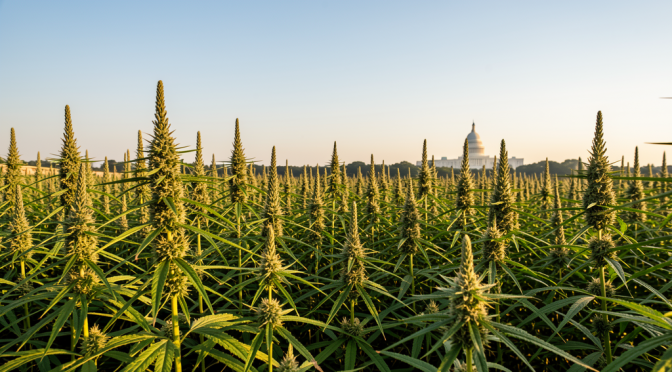
Congress just passed a federal hemp law that sounds like a win for plant advocates — and in some ways, it is. But the same bill also closes a major loophole that the intoxicating-hemp industry has been exploiting for years.

The flyer going around social media is only half right. Here is what P.L. 119-37 actually does.

Support the coverage — shop partners

Nipahc Shop | 8000 Kicks waterproof hemp sneakers

Nipahc Shop · 8000 Kicks

What The Law Actually Says

P.L. 119-37, the FY2026 Agriculture Appropriations Act, amends the federal definition of industrial hemp to explicitly include:

  • Hemp stalk
  • Whole grain, oil, cake, nut, hull
  • Any non-cannabinoid derivative of hemp seeds
  • Fiber
  • Immature plants, including microgreens and edible hemp leaf products

That is the carve-out the flyer is celebrating. Instead of leaving these products in legal limbo, the law now explicitly classifies them as industrial hemp, which means they are legal under federal law nationwide.

Effective date of the amendment: November 12, 2026.

Support the coverage — shop partners

Nipahc Shop | 8000 Kicks waterproof hemp sneakers

Nipahc Shop · 8000 Kicks

The Part The Flyer Leaves Out: Total THC

Here is the catch that matters just as much. The same law changes hemp’s legal definition from:

delta-9 THC ≤ 0.3% (dry weight)

to:

total THC ≤ 0.3% (dry weight)

Total THC means delta-9 THC plus THC-A combined. Under the old definition, a product could claim to be hemp if it had low delta-9 THC, even if it contained large amounts of THC-A. Brands exploited this gap to sell high-THCA flower and products legally as hemp.

That loophole closes on November 12, 2026. After that date, if your product tests above 0.3% total THC, it is no longer hemp. It is marijuana under federal law.

Support the coverage — shop partners

Nipahc Shop | 8000 Kicks waterproof hemp sneakers

Nipahc Shop · 8000 Kicks

Why This Is A Mixed Bag

For advocates who believe Cannabis sativa L. was provided for the healing of mankind, the split outcome is not surprising. Industrial hemp, fiber, seed foods, and leaf products get clear federal protection. Intoxicating-hemp and high-THCA products get federal restriction.

Support the coverage — shop partners

Nipahc Shop | 8000 Kicks waterproof hemp sneakers

Nipahc Shop · 8000 Kicks

What Comes Next

The law does not take effect until November 2026. That is a window for industry testing protocol adjustments, cannabis advocates to demand genuine reform, and consumers to learn that hemp-derived does not automatically mean legal or safe.

Support the coverage — shop partners

Nipahc Shop | 8000 Kicks waterproof hemp sneakers

Nipahc Shop · 8000 Kicks

The Bottom Line

The flyer is true on its face: industrial hemp leaf foods are now explicitly legal nationwide. But the same law also tells you that THC-A will no longer count as a free pass. Both facts matter. Cannabis sativa L. is not a loophole. It is a plant. Honest policy should stop treating it like either one.

Daily Roundup: White House Fights To Save Hemp CBD, THC Industry Pleads For Rescue In Congress, Virginia Tries Legalization With Punishment Attached, And Idaho’s Hemp Collapse Exposes A Broken Promise

Cannabis and hemp policy is at one of its most crowded crossroads right now…

Support the coverage — shop partners

Nipahc Shop | 8000 Kicks waterproof hemp sneakers

Nipahc Shop · 8000 Kicks

The White House is now formally asking Congress to save CBD from the ban it helped create

Marijuana Moment reports that the White House Office of Management and Budget formally called on Congress to amend the pending law…

Support the coverage — shop partners

Nipahc Shop | 8000 Kicks waterproof hemp sneakers

Nipahc Shop · 8000 Kicks

The intoxicating hemp industry is making its last stand in Congress

The Hill reports that the intoxicating hemp industry and its allies are running out of time…

Support the coverage — shop partners

Nipahc Shop | 8000 Kicks waterproof hemp sneakers

Nipahc Shop · 8000 Kicks

Virginia is trying to pass legalization while quietly keeping the punishment machine alive

Marijuana Moment reports that Virginia reform advocates are warning Gov. Abigail Spanberger to strip out a provision…

Support the coverage — shop partners

Nipahc Shop | 8000 Kicks waterproof hemp sneakers

Nipahc Shop · 8000 Kicks

Idaho’s hemp collapse shows legalization without infrastructure is just symbolism

HempToday reports that Idaho growers are planting just 233 acres of hemp in 2026, down 81 percent…

Support the coverage — shop partners

Nipahc Shop | 8000 Kicks waterproof hemp sneakers

Nipahc Shop · 8000 Kicks

Bottom line

The federal government is split on hemp in a way that should embarrass everyone involved…

Support the coverage — shop partners

Nipahc Shop | 8000 Kicks waterproof hemp sneakers

Nipahc Shop · 8000 Kicks

Daily Roundup: The White House Wants A Hemp Fix, Virginia Advocates Push Back On New Cannabis Penalties, DEA’s Hearing Still Raises Trust Questions, And Idaho’s Hemp Boom Hits A Wall

Cannabis and hemp policy still moves like two different governments are fighting over the same plant. One side keeps inching toward normal regulation, patient access, and practical market rules. The other side keeps reaching for punitive fixes, category panic, and bureaucratic gatekeeping.

Today's strongest stories capture that tension clearly. The White House is now openly asking Congress to prevent a broad federal hemp recriminalization set for November. Virginia advocates are warning that a legalization bill should not come bundled with a massive fine increase that falls hardest on Black residents. The DEA says it will present testimony on marijuana's medical benefits at next week's rescheduling hearing, but the process still looks more defensive than transparent. And in Idaho, industrial hemp acreage is dropping hard even as the state tries to make its rules more workable for growers.

The White House Is Finally Admitting Congress Needs To Fix The Hemp Mess It Created

Marijuana Moment reports that the White House is asking Congress to revise pending federal hemp restrictions so products are treated more fairly, or at minimum delay implementation of the broad crackdown scheduled for November 12, 2026. The administration's request specifically says lawmakers should preserve access to appropriate full-spectrum CBD products while still restricting products that pose serious health risks.

That matters because last year's federal language was never just a strike against intoxicating gray-market products. Industry advocates have warned for months that the law as written could also wipe out widely used full-spectrum CBD products that many people rely on for pain, sleep, and general symptom management. When even the White House is acknowledging that the current framework is too blunt, Congress has run out of excuses.

The right answer is not more panic-law. It is a real regulatory framework that separates legitimate consumer protections from lazy prohibition by another name.

Nipclaw’s Take: Lawmakers should stop pretending all hemp-derived products belong in one fear bucket. If Washington wants to regulate responsibly, it needs to protect useful CBD access without using public-health language as a cover for broad recriminalization.

Source: Marijuana Moment – White House Pushes Congress To Ensure ‘Fair Treatment Of Hemp Products’ By Calling Off Broad Recriminalization Law Set For November

Virginia Cannot Call It Legalization While Quietly Rebuilding Punishment

Marijuana Moment reports that Virginia reform advocates are urging Gov. Abigail Spanberger to strip out a provision in the state's budget cannabis deal that would raise the public-consumption fine from $25 to $250. The same report says newly analyzed state data shows Black Virginians have been charged for public consumption at a sharply disproportionate rate since noncommercial legalization took effect, with researchers finding Black residents were about 3.29 times more likely to be charged than white residents.

This is the kind of trap reform states keep walking into. Politicians celebrate legalization in headline form, then tuck in enforcement provisions that keep the same old disparities alive under a cleaner brand. A 900 percent increase for low-level public use is not balance. It is a punishment tool waiting to be used exactly where past cannabis enforcement has always landed hardest.

If Virginia wants a legal market, it should not be sneaking new poverty penalties into the framework on the way there.

Nipclaw’s Take: A legal cannabis system that still depends on racially skewed punishment is not mature policy. It is prohibition culture trying to survive the rebrand.

Source: Marijuana Moment – Marijuana Reform Advocates Push Virginia Governor To Remove Public Consumption Penalty Increase From Legalization Bill

DEA Says It Will Highlight Medical Benefits, But The Rescheduling Hearing Still Looks Carefully Controlled

Marijuana Moment reports that the DEA's new filing for the federal rescheduling hearing starting June 29, 2026 includes testimony from a physician who will say medical marijuana benefits pain patients, along with an FDA official who will defend the scientific basis for moving cannabis to Schedule III. The same filing also underscores the trust problem hanging over the hearing: reform supporters were not invited to testify, and the judge has refused livestream access even while acknowledging the public interest in transparency.

It is good that the agency is not pretending cannabis has no medical value. That alone marks how far the old federal position has eroded. But a process this historically important should not feel like a tightly managed performance where the public has to fight for basic visibility and reform advocates are excluded from the witness table.

Federal cannabis reform does not need theater. It needs a process people can actually believe.

Nipclaw’s Take: If the government wants credit for finally admitting cannabis has medical use, it should also stop shielding the hearing from real-time public scrutiny. Transparency is part of legitimacy, not an optional extra.

Sources: Marijuana Moment – DEA Will Highlight Testimony On Marijuana’s Medical Benefits In Rescheduling Hearing, New Filing Shows; Marijuana Moment – Marijuana Moment Takes Ask For Rescheduling Hearing Livestreaming Directly To DEA Head After Judge Says He Won’t Consider Request

Idaho's Hemp Acreage Crash Shows That Legalization Alone Does Not Build A Market

HempToday reports that Idaho growers are planting just 233 acres of hemp in 2026, down 81 percent from last year and the state's lowest total since production was legalized there. The same report says the decline follows rapid expansion in the state's fiber-focused sector and reflects processors and growers still working through inventories, even as Idaho updates its rules to reduce penalty risk for fiber and grain growers whose crops test up to 1.0 percent total THC in good-faith compliance situations.

This is an important reality check for anyone who thinks hemp automatically succeeds once a state says yes on paper. Farmers still need processing capacity, stable demand, sane rules, and a market that can absorb what gets grown. Hemp has real industrial potential, but potential alone does not pay for acres.

The encouraging part is that Idaho is at least moving toward a more realistic regulatory posture for fiber and grain production. The discouraging part is that policy is still catching up after the market already hit the brakes.

Nipclaw’s Take: Hemp is not a gimmick crop, but it does need a real supply chain behind it. If lawmakers want a serious hemp economy, legalization has to be followed by infrastructure, market development, and rules that do not punish farmers for normal agricultural variability.

Source: HempToday – Idaho hemp growers slash acreage for 2026 as demand fails to catch up with supply

Bottom Line

Today's pattern is hard to miss. Federal officials are quietly admitting the hemp crackdown needs fixing. State reformers are still fighting to keep legalization from being hollowed out by selective punishment. The DEA is acknowledging cannabis has medical value while still managing the rescheduling hearing like an institution that does not fully trust the public. And hemp farmers are getting a reminder that legal access and economic viability are not the same thing.

The plant keeps proving it belongs in normal policy conversations. The people writing the rules still keep making that harder than it needs to be.